CLINICAL EXPERIENCE

Case Studies

Explore clinical cases across our product portfolio, with procedural insights, original imaging and reported outcomes.

Individual clinical experiences are provided for professional information. Reported outcomes do not establish comparative safety or effectiveness. Refer to applicable local authorization and approved Instructions for Use.

Silene™ · Case report

Aorta & left subclavian artery

Simultaneous repair of aortic dissection and abdominal aneurysm

Presentation

A 65-year-old man with hypertension and diabetes presented with sudden thoraco-abdominal pain. CT showed an acute type B aortic dissection, compression of the true lumen and a 72 mm infrarenal abdominal aortic aneurysm. Persistent pain and uncontrolled hypertension prompted treatment.

Procedure

A 10 × 31 mm Silene covered stent was used as a left subclavian chimney to preserve branch perfusion during thoracic endovascular repair. Separate thoracic and abdominal stent-grafts and a bare-metal dissection stent completed the repair. Silene was one component of this combined procedure.

Reported outcome

The authors reported patent branch vessels and satisfactory sealing on completion imaging. The patient was discharged after seven days. At one year, CT angiography showed good graft position, false-lumen remodeling and complete aneurysm exclusion, with no symptoms reported.
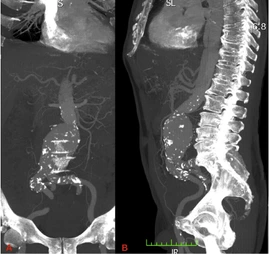
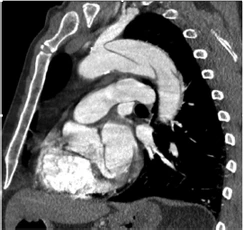
Preoperative CT: dissection
Preoperative multiplanar CT views of the aortic dissection
Preoperative CT: abdominal aneurysm
CT reconstructions showing the infrarenal abdominal aortic aneurysm
Preoperative CT: aortic arch
CT view of the aortic arch and dissection
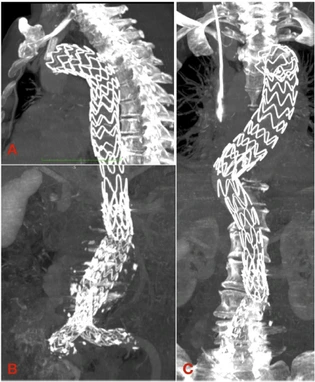
Postoperative CT: combined repair
Postoperative CT reconstructions showing thoracic graft, abdominal graft and complete implant configuration

Silene™ · Clinical review

Aorto-iliac & visceral circulation

Aorto-iliac reconstruction and preservation of branch perfusion

Clinical context

A clinical review discusses Silene use in aorto-iliac obstructive disease and complex aortic aneurysm repair. It describes experience with aorto-iliac revascularization, chimney techniques and fenestrated endografts, rather than a single patient history.

Approaches discussed

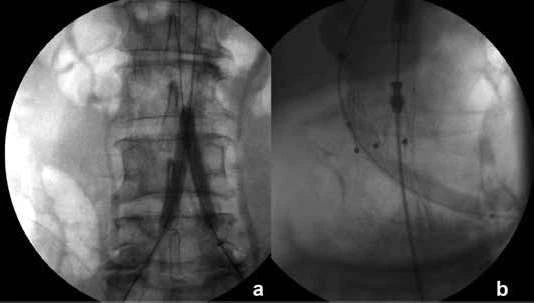
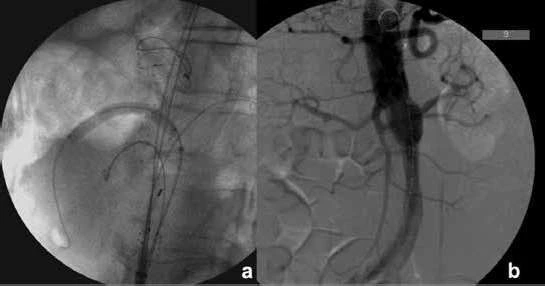
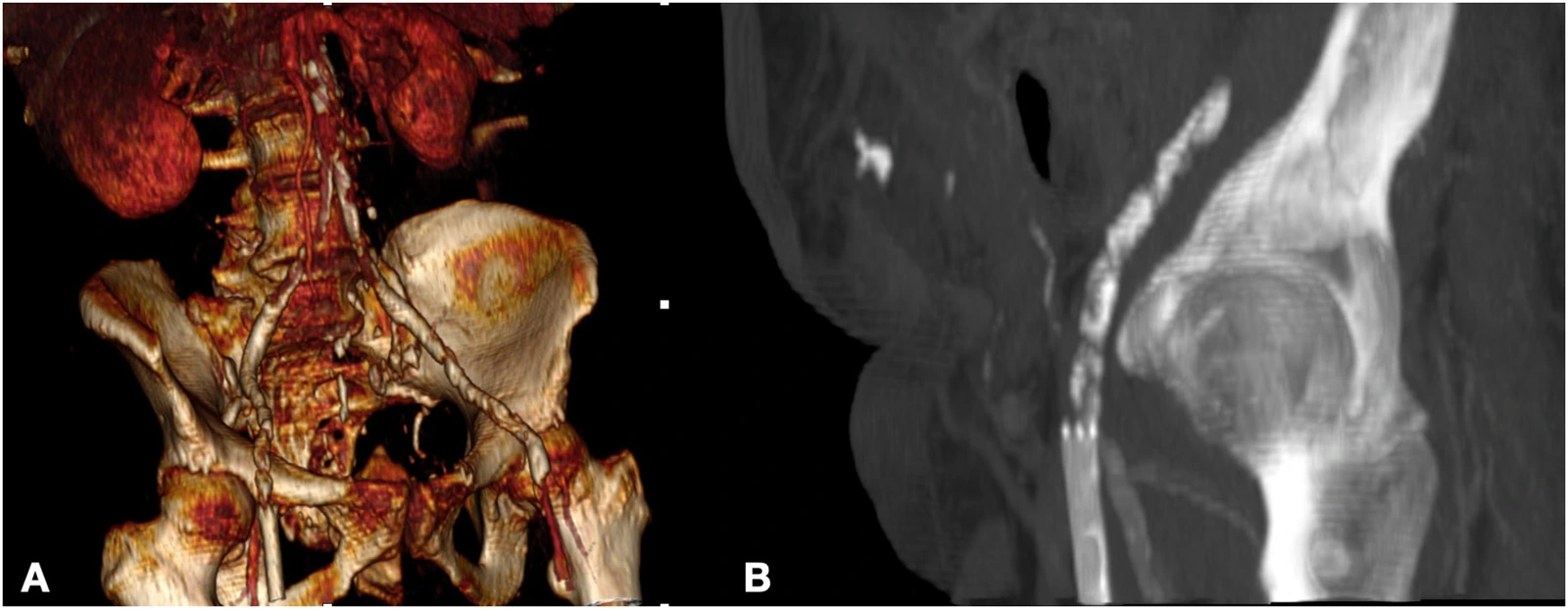
The accompanying figures illustrate aorto-iliac kissing covered stents and chimney stenting during aneurysm repair. The review also discusses covered stents as connections to renal or visceral branches when aortic graft placement would otherwise cover their origins.

Reported experience

Dr. Roberto Chiappa describes favorable handling and preservation of visceral-branch perfusion in his experience. The review provides no patient-level outcome dataset, follow-up interval or comparative analysis; the accompanying postoperative rendering is illustrative.

Aorto-iliac and chimney procedures
Review figure: aorto-iliac kissing stents in panel a and chimney aneurysm treatment in panel b
Fenestrated repair: renal and mesenteric branches
Figure 3: right renal stent placement and angiographic control after Silene stents in both renal arteries and the superior mesenteric artery
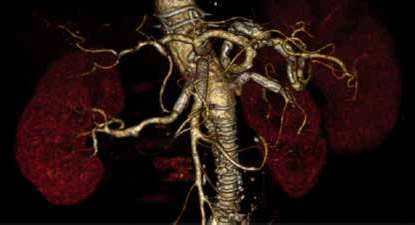
Postoperative volume rendering
Postoperative vascular volume rendering reproduced from the clinical review

Silene™ · Complication case report

Iliac-femoral arteries

Iliac-femoral graft infection after a repeat hybrid procedure

Presentation

An 80-year-old woman with hypertension, diabetes, prior superficial femoral stenting and concurrent urinary infection had right-leg rest pain and multilevel arterial disease. Imaging showed iliac disease and an occluded femoral stent compromising deep femoral inflow.

Procedure

Hybrid revascularization combined femoral endarterectomy and patch angioplasty with a 7 × 70 mm Silene in the common iliac artery and a 7 × 150 mm Viabahn extension in the external iliac artery. Two months later, wound breakdown, sepsis and CT findings of graft infection prompted antibiotics and complete graft removal.

Reported outcome

Initial pain and cyanosis improved after revascularization. On readmission, cultures confirmed Staphylococcus aureus infection. Further revascularization was not feasible, and irreversible ischemia required major amputation. Sepsis subsequently improved; the authors reported discharge after three weeks and wound closure two weeks later.

Preoperative CT angiography
Figure 1: preoperative three-dimensional CT and multiplanar views of iliac-femoral arterial disease
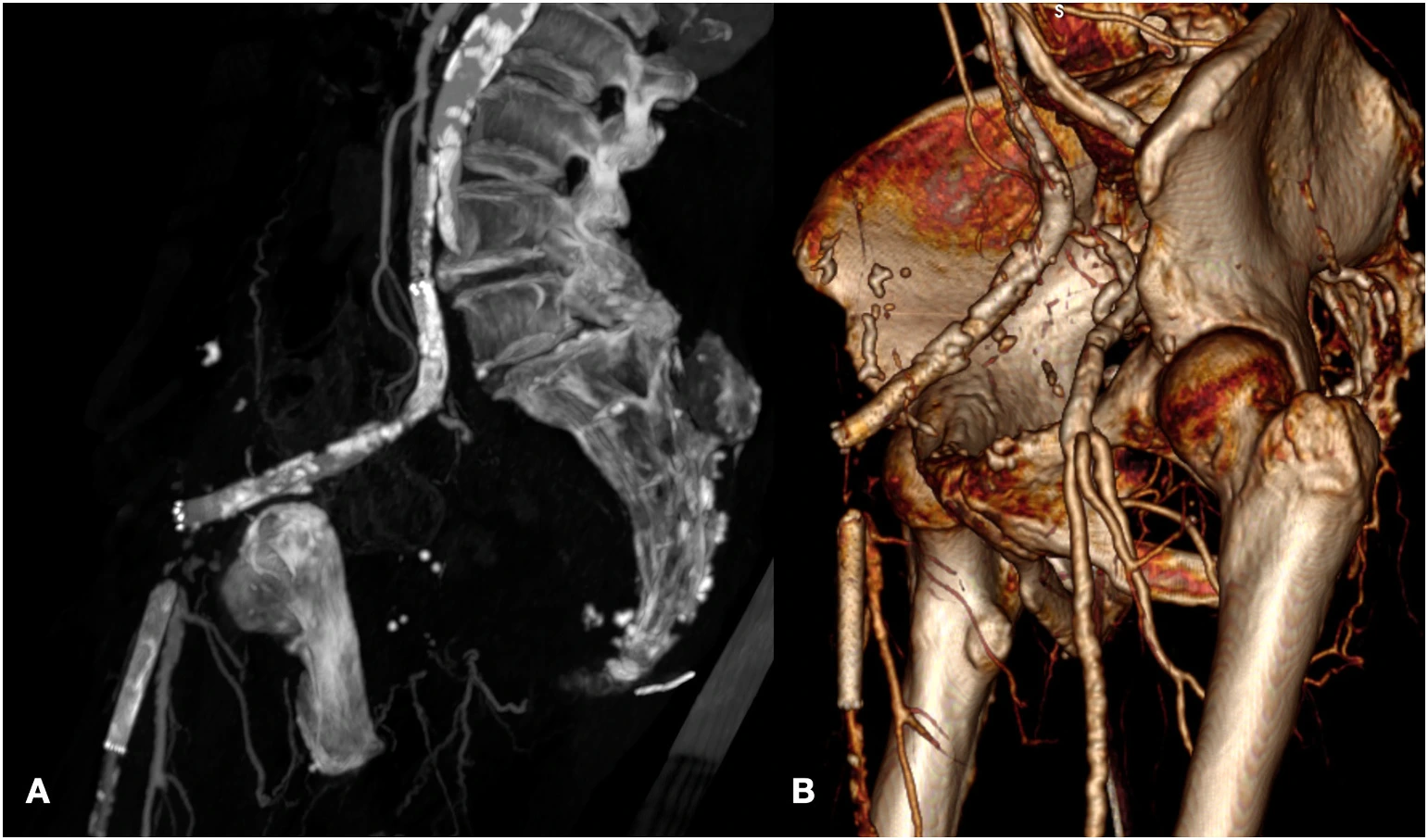
Readmission: CT before graft removal
Figure 2: CT angiography before the second procedure following suspected iliac-femoral graft infection
Case notes

The procedure involved Silene, a Viabahn stent-graft and a surgical patch. The report describes a complication of the combined reconstruction and does not establish a device-specific cause.